Gallery Showcase
High optical access (HOA) trap
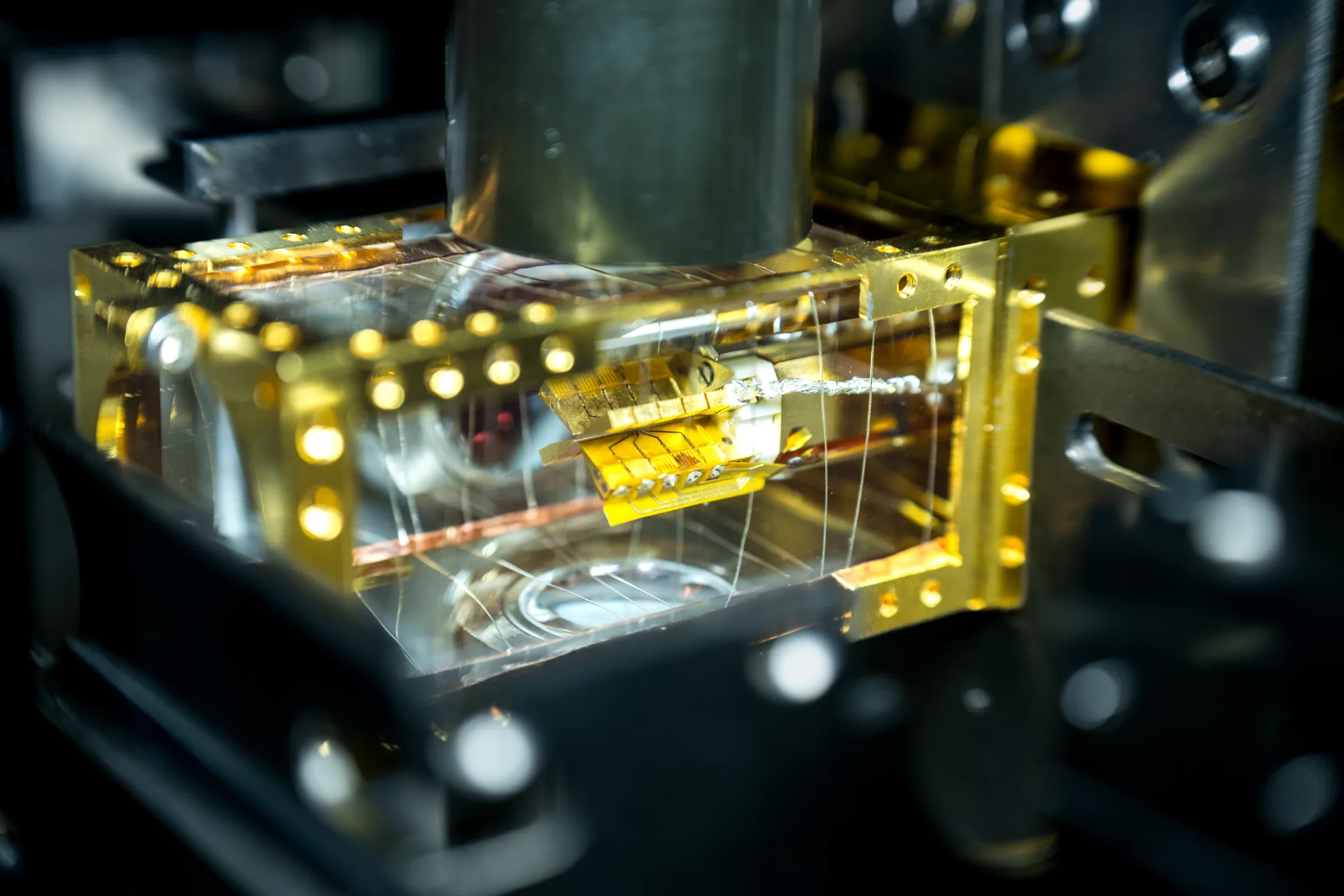
Four directions of high-NA optical access
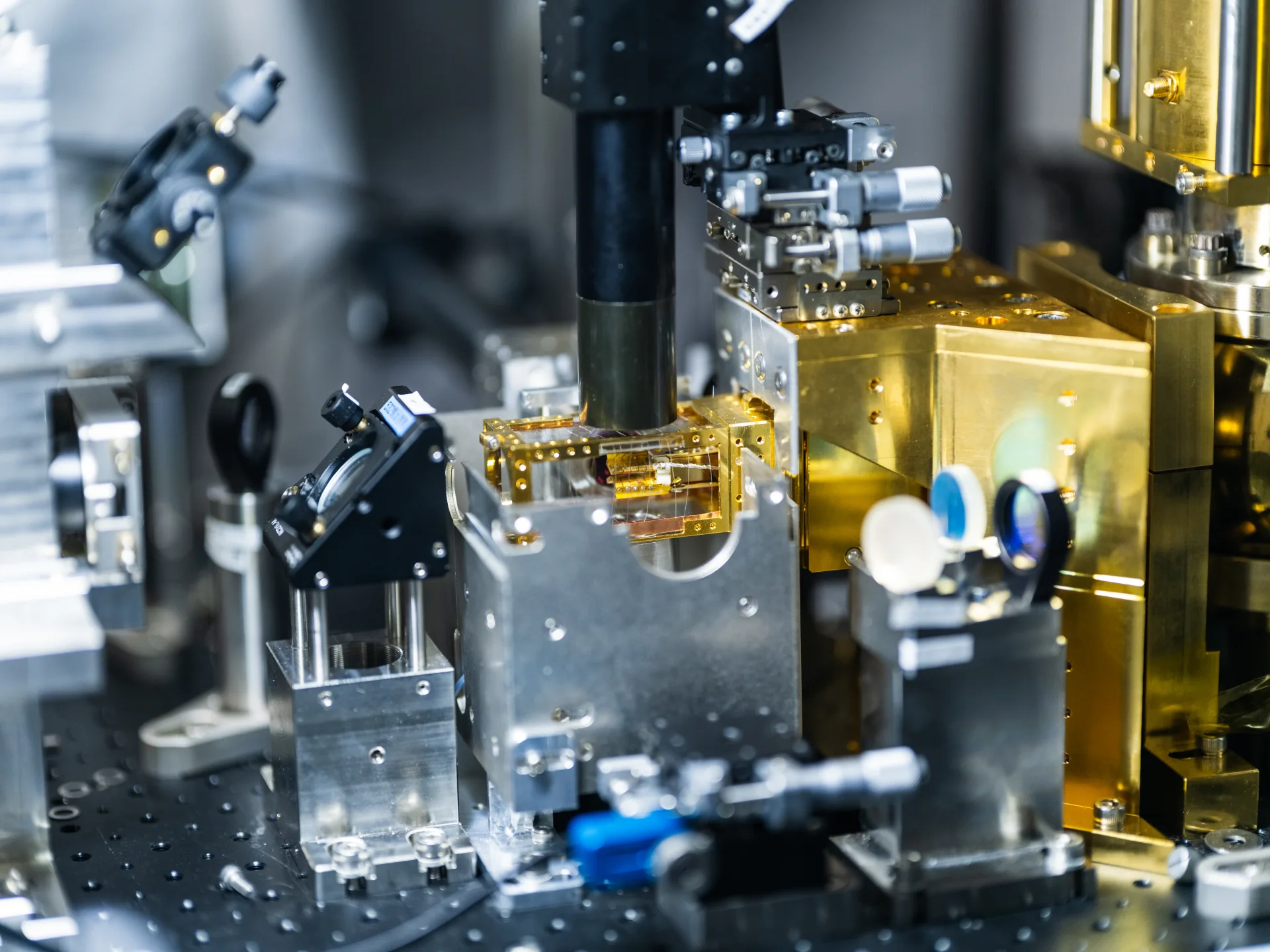
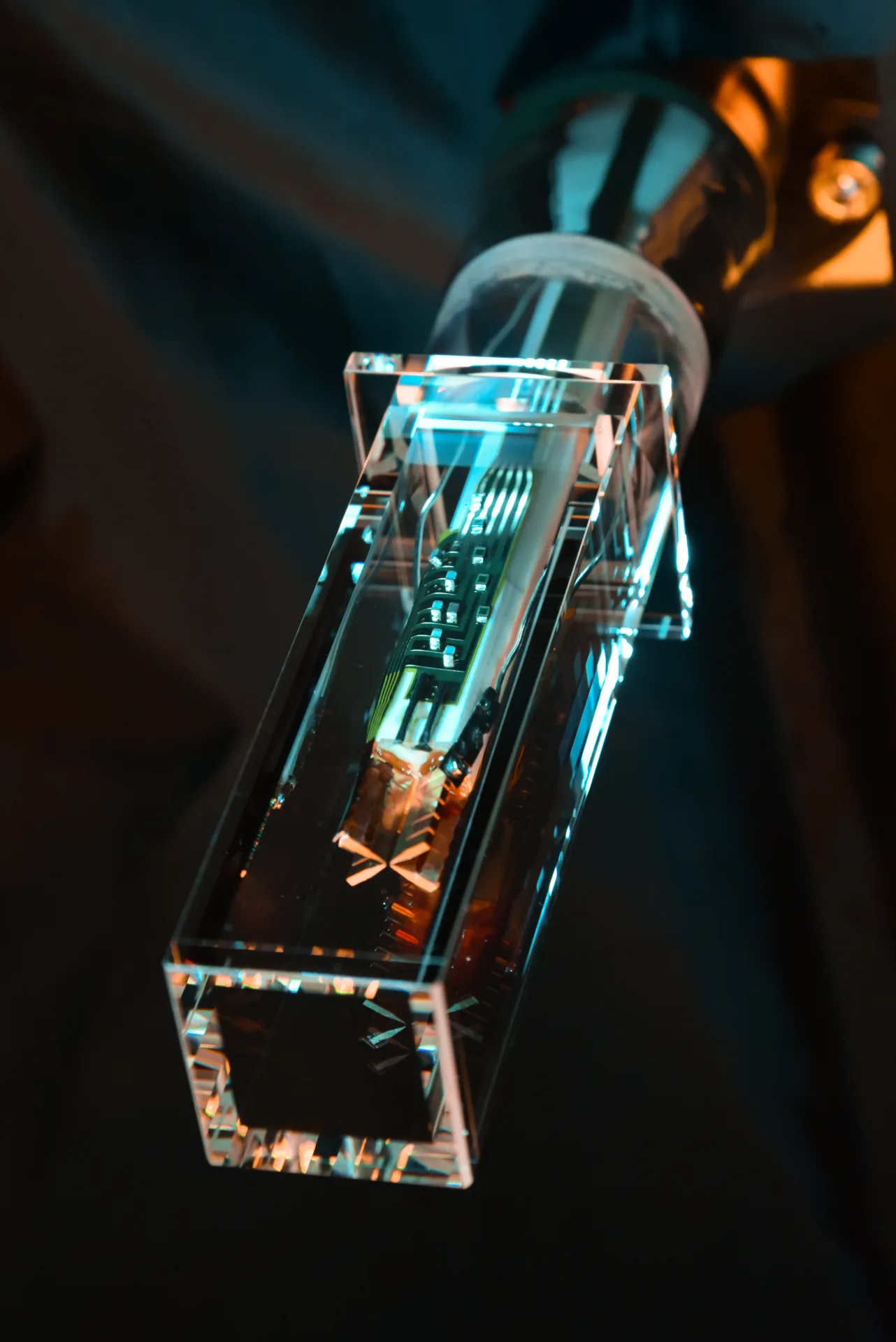
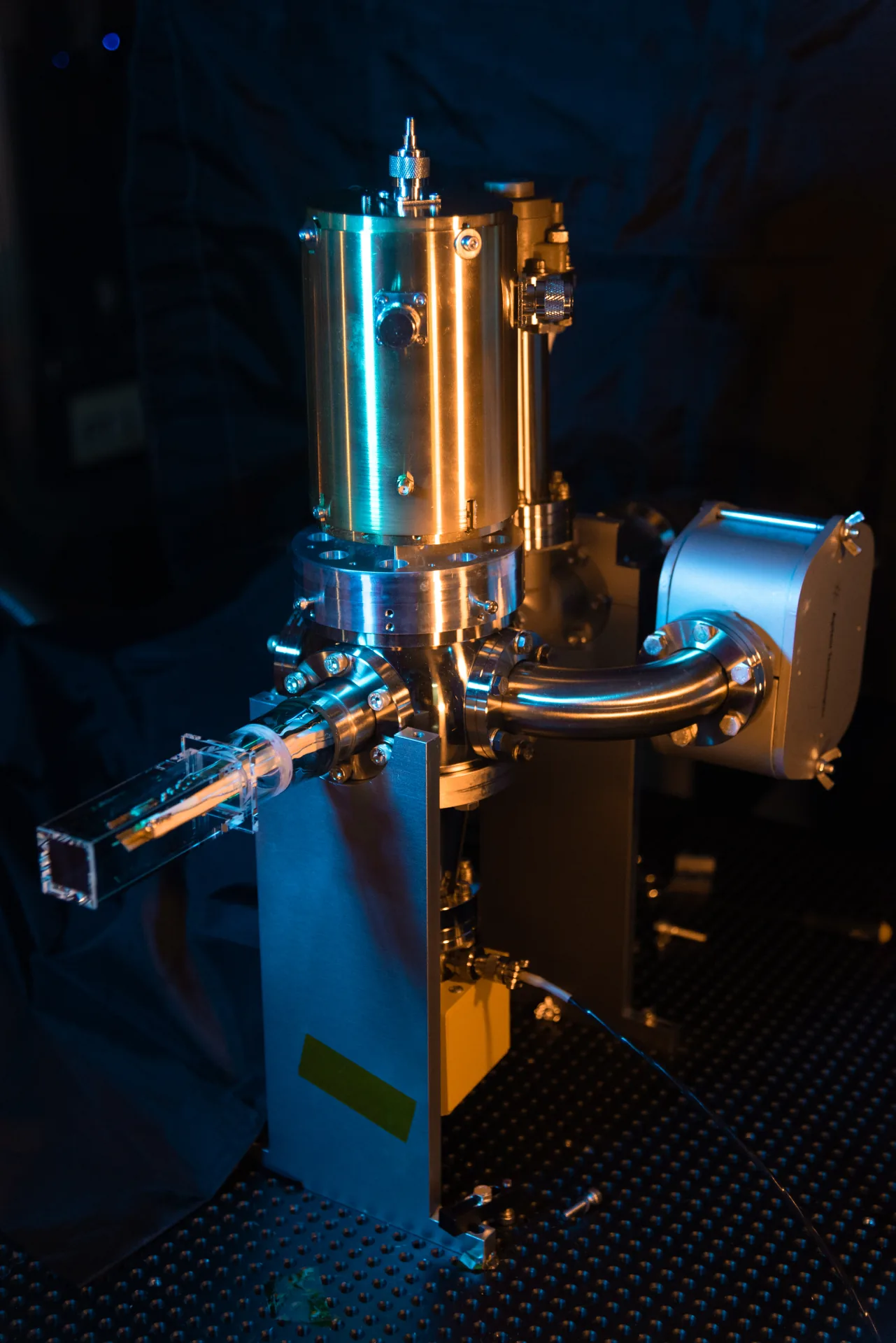
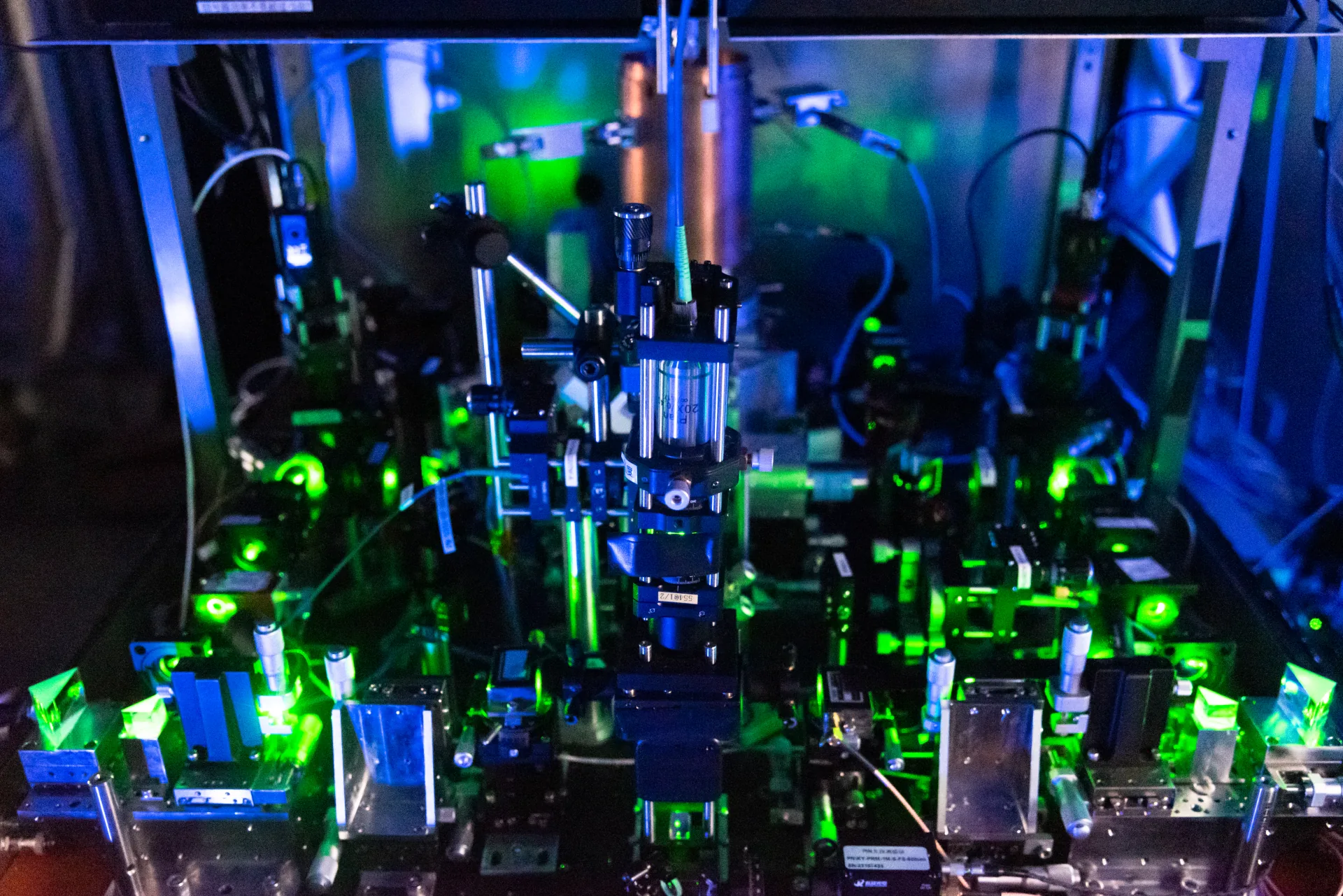
Our high-optical-access apparatus (Review of Scientific Instruments, 2021) places a miniaturized blade-electrode ion trap in an all-glass cell, opening optical paths for tightly focused control beams and fluorescence collection. The geometry supports high-numerical-aperture objectives from four directions. These objectives provide multi-directional addressing, ion imaging and quantum-state readout, allowing the optical system to be configured around the needs of each experiment.
From precise addressing to new quantum gates
The HOA platform supports our research on ion control with tightly focused light and optical tweezers. We used its optical access to develop low-crosstalk dual-sided Raman addressing, then used the optical Magnus effect to implement addressed entangling gates with single-sided polarization-gradient control. Together with in-situ aberration correction using an ion probe, high-quality focused fields allow us to select individual qubits and couple to axial motion along an ion chain.
Optical control of the crystal’s motional spectrum
The open optical geometry also allows local optical-tweezer potentials to be combined with electrical confinement. We have demonstrated optical control of an ion’s vibrational frequency and are investigating how local light fields can dynamically reshape the frequencies and spatial structure of phonon modes in a crystal. This approach aims to reduce crosstalk from unwanted motional modes and provide additional control for high-fidelity gates directly within ion crystals.